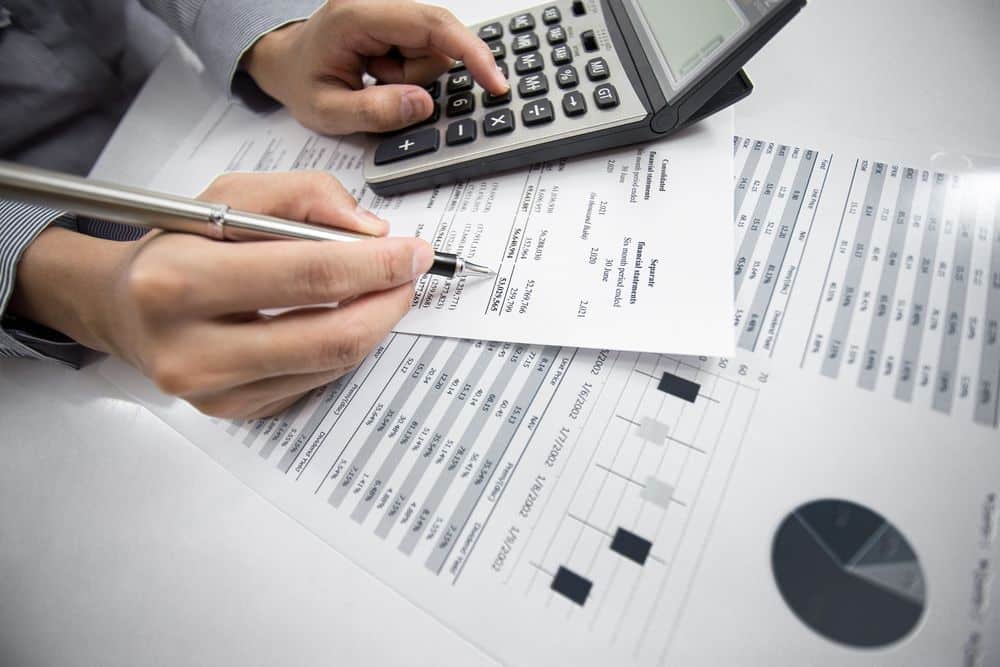
Difficult to imagine an area of everyday life where mathematical formulas do not apply. In both concrete and abstract contexts, they allow us to solve problems and conduct analyses. In business, and more specifically in finance, mathematics enables the calculation of the change between two data points. This is a basic calculation called the rate of change, which is useful in several other sectors. Learn more about the topic in this article.
The rate of change: what is it?
The rate of change is a mathematical formula that quantifies the difference in value of a numerical quantity between an initial moment and a final moment. It is a value used in data analysis across many fields to make assessments or draw conclusions. The formula to apply for calculating the rate of change of a numerical quantity between two moments is as follows: Te = ((VF-VI)/VI) × 100
Te represents the rate of change, while VF and VI are used to denote the final value and the initial value, respectively. It is important to note that the result of this rate of change formula is expressed as a percentage.
The rate of change is generally preceded by a + sign when it is positive. This helps avoid confusion between a simple rate or a negative rate of change. When the result of the calculation shows a value greater than 100%, it means that the final value is more than double the initial value.
To give an example, suppose a company has savings of 1000 euros at date X and 1100 euros at date Y. The calculation of the rate of change would yield:
Rate of change = ((1100-1000)/1000) × 100 = 10%.
In the case where the initial savings of the company were 1000 euros at date X and 2100 euros at date Y, the rate of change would then be:
Rate of change = ((2100-1000)/1000) × 100 = 110%.
Calculating the reciprocal rate of change
To calculate the reciprocal rate of change, the following method is used:
Te’ = ((VI-VF)/VF) × 100
The formula remains the same as that of the rate of change, except that in the reciprocal rate of change, the positions of VI and VF are swapped.
If we take our previous example, where the initial value is 1000 euros and the final value is 1100 euros, the calculation would become:
Reciprocal rate of change = ((1000-1100)/1100) × 100 = -0.09%.
The difference between the two may seem quite minimal. However, it is quite clear that the values are far from being similar. Also, it should be noted that the value of these two rates is expressed according to the units of VI and VF.
Furthermore, by using the rate of change, you will be able to determine the multiplicative coefficient between the initial value VI and the final value VF. The formula for the multiplicative coefficient is: c = 1 + Te.
For Te = ((VF-VI)/VI)
c = 1 + ((VF-VI)/VI)
c = (VI + VF – VI)/VI;
c = VF/VI.
We can then deduce that VF = c. VI
With this formula, it is possible to find one of the two values as soon as you know the other and the multiplicative coefficient.
Calculating the index of the initial value relative to the final value
The index of the final value relative to the initial value is determined by the number:
I = 100 × (VF/VI).
Knowing that the multiplicative coefficient c = VF/VI or c = 1 + t, we deduce that
I = 100 × c or I = 100 × (1+t)
where t represents the rate of change between VI and VF.
If we take the initial example:
I = 100 × (1100/1000) = 110.
We would then say that the index of 1100 relative to 1000 is 110.
The value of the index is always strictly positive. It indicates an increase when it is above 100 and a decrease when it is below 100. An index of 110 would therefore be interpreted as an increase of 10%. The value of the index relative to 100 can allow us to deduce the rate of change.
In summary, the rate of change is a formula applied in many fields to calculate changes over a period. It is used to understand the evolution of purchasing power or the prices. It can also serve to estimate the growth of a company. The result of the calculation can be interpreted as follows: between the starting moment and the arrival moment, the variable experienced an increase/decrease of Te%, with Te being the rate of variation in percentage.