A rainy Sunday, three children of different ages, and the prospect of an afternoon that goes in circles. We all know that moment when the usual activities are no longer enough. Diversifying family leisure does not require an extravagant budget or complex organization, but rather a change in approach to how we choose and combine activities.
Hybrid formats for family leisure: combine rather than choose
The most useful trend in recent years is the emergence of places that mix several activities under one roof. Instead of going to the pool, then to the park, then to a creative workshop, some spaces combine physical activity, games, dining, and even a quiet corner for parents.
This format addresses a concrete problem: the logistical burden. When you have children between three and twelve years old, hopping between multiple sites turns an outing into a chore. A single location offering trampolines, a water area, and a craft workshop allows everyone to find their enjoyment without parents spending their day in the car.
You can explore leisure activities with Essentium to identify options that combine multiple experiences in a single trip, simplifying weekend planning.
Feedback varies on this point depending on the regions, but local authorities are increasingly structuring a short circuit leisure offer. Within a small perimeter, families can combine local heritage, aquatic centers, interactive workshops, and cultural events. The time saved on transport completely changes the dynamics of a day.
Nature micro-adventures with children: slow down to enjoy more
For a long time, it was believed that diversifying leisure meant multiplying spectacular activities. The current trend goes in the opposite direction: slow, sensory outings, within two hours of home.
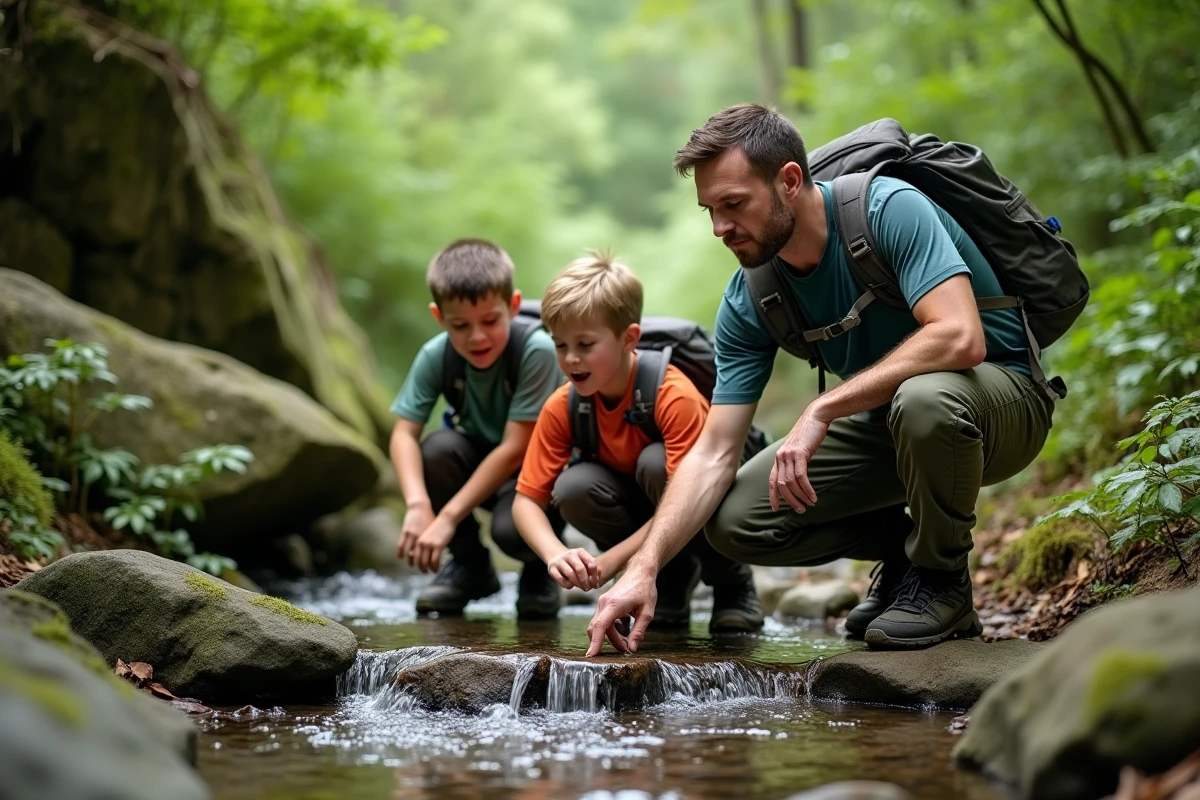
Specifically, a family micro-adventure can take the form of a walk without a fixed route in the forest, an insect observation session by a river, or a picnic in a place never explored nearby. The absence of a program becomes the program.
What works with children of different ages
The main challenge when going out as a family is finding an activity that neither frustrates the youngest nor the oldest. Nature outings have this advantage: each child finds their own pace. The youngest collects pebbles while the oldest climbs a slope.
- Themed walks (looking for five species of birds, photographing mushrooms) channel the attention of older children without restricting the little ones
- Outings at the end of the day, when the light changes, create a different atmosphere that refreshes a previously visited place
- Involving children in choosing the route (paper map, compass) transforms an ordinary walk into an orientation game
This type of outing costs nothing and renews family leisure without adding logistics.
Intergenerational games and activities: include grandparents and cousins
Diversifying is not just about the type of activity, but also the people involved. Multigenerational leisure brings a dynamic that the restricted family unit does not replicate.
Some schools have started organizing days around sensory workshops and cooperative games open to extended families. This “mixed team game” format (children, parents, grandparents) creates shared memories and allows generations to discover each other outside the home environment.
Concrete activities that work between generations
Not everyone can do trampoline or tree climbing. Activities that work in a multigenerational setting share a common point: they do not require the same physical level from all participants.
- Cooking or baking workshops where everyone has a role suited to their abilities
- Outdoor treasure hunts with clues of varying difficulty according to age
- Visits to local heritage with a playful support (exploration booklet, team quiz)
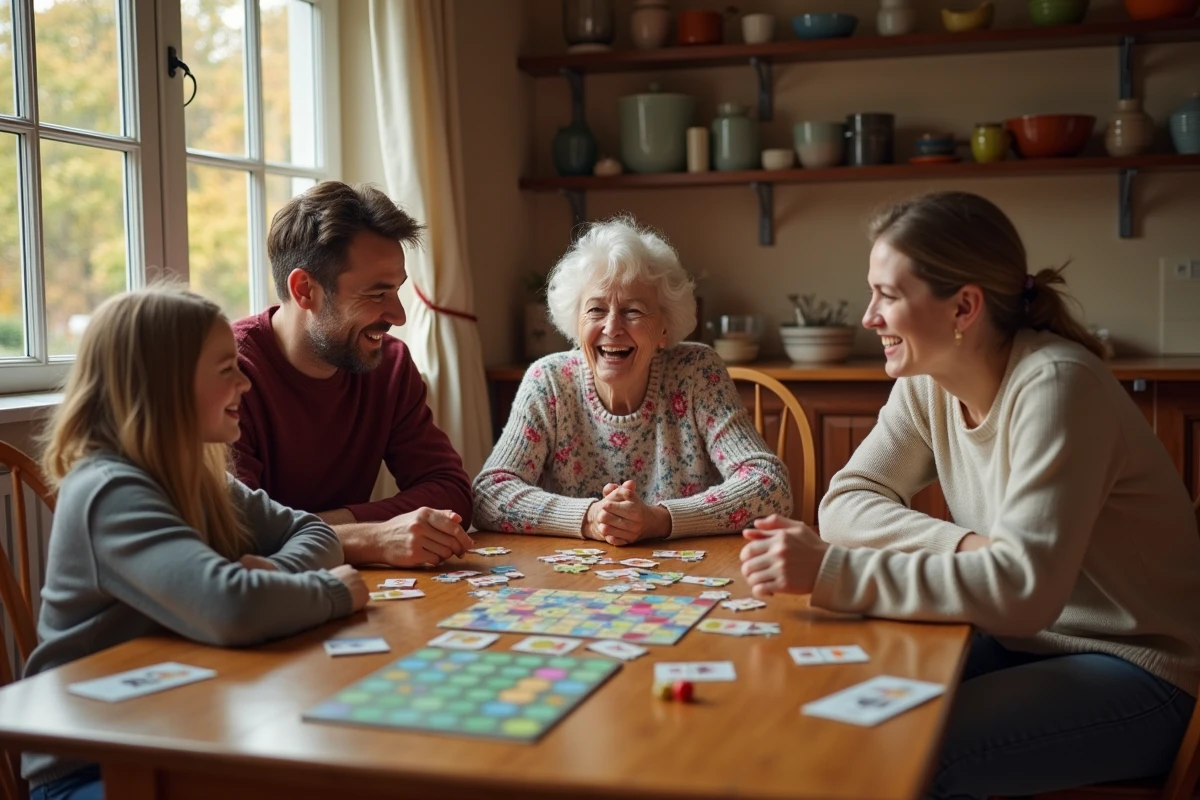
- Afternoons of cooperative board games, where we play together against the game rather than against each other

Wellness outings for families: an often overlooked angle
We rarely think of wellness as a family activity. The idea of taking children into a “relaxation” context seems contradictory. Yet, adapted formats exist and meet a real need for parents: to share a calm moment without it being synonymous with screens.
Some places now combine gentle physical activity (parent-child yoga, barefoot trails outdoors) with free play areas. The principle is based on alternation: an active time, a calm time, without sacrificing one for the other.
This format particularly appeals to families with young children, for whom classic outings (amusement parks, noisy events) generate more fatigue than pleasure. Offering a slower pace in a setting designed for families changes the very nature of the outing.
How to test without investing
Before booking a stay or a paid activity, you can replicate this approach at home or in a municipal park. An improvised sensory trail in the garden (water bins, sand, pebbles, grass) keeps children occupied for a good hour. Diversification often starts with a change of format, not location.
The reflex to always seek a new destination masks a simple reality: the same spaces, approached differently, offer renewed experiences. Visiting the same park as a “photographer,” then as a “botanist,” then as an “orientation runner” multiplies possible outings without multiplying the kilometers. This is often the easiest constraint to lift to diversify family leisure over time.