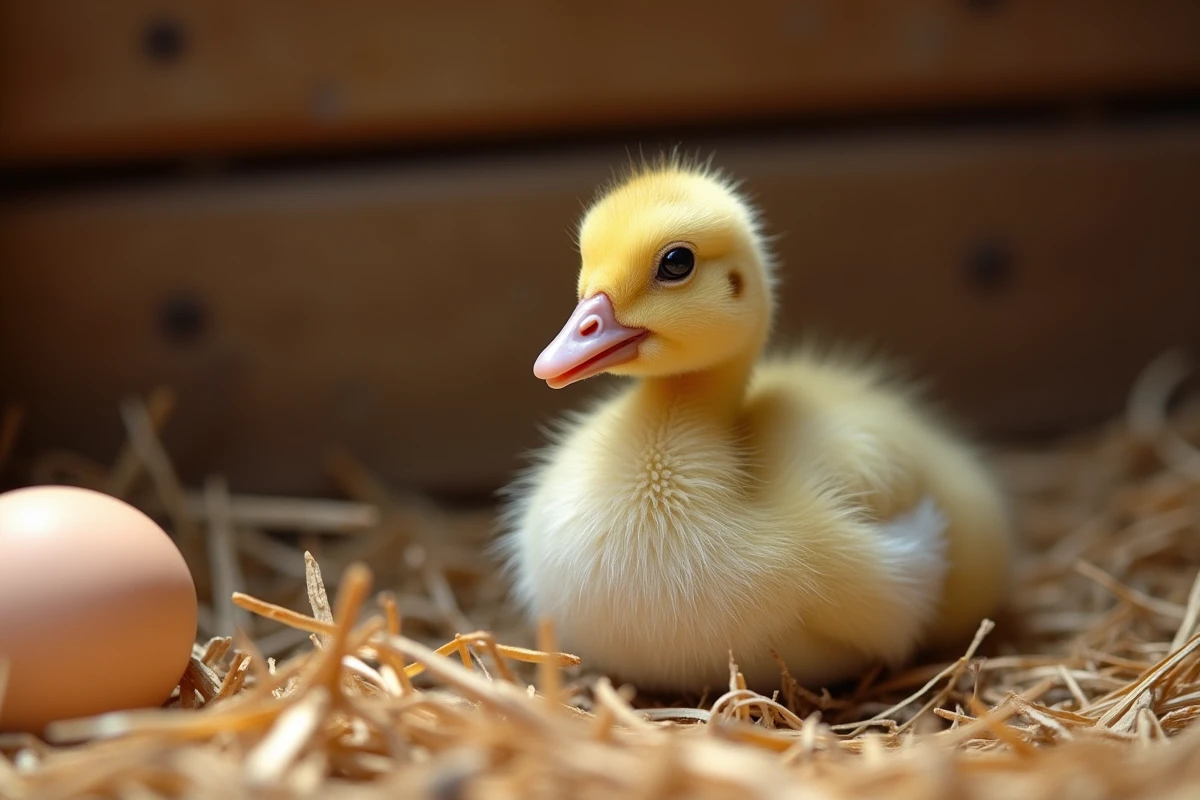
When you receive a dozen goslings delivered in a ventilated cardboard box one April morning, the first priority is not to read a rural breeding guide. It is to find a heated, dry corner, sheltered from drafts, in a space that sometimes measures less than twenty square meters.
The growth stages of baby geese remain the same, whether you have a hectare of pasture or an urban micro-farm enclosure, but the space constraints change everything in daily management.
Growth of Goslings in Urban Micro-Farming: What Really Changes
Classic goose breeding guides assume you have a pasture, a body of water, and a dedicated building. In urban micro-farming, we work with a converted technical room, a small enclosed garden, and sometimes just a simple water trough. The challenge is not to give up raising geese, but to adapt each phase of development to these reduced spaces.
During the first weeks, the space constraint plays little role: the goslings fit in a starter box. The real challenge begins from the third week, when the growth of the goslings accelerates sharply and the density in the brooder becomes a concrete problem. At this point, you need to anticipate a modest covered transition space to avoid pecking and respiratory issues related to confinement.
To better understand the development of the baby goose on Animaleo, you can compare developmental benchmarks with what is observed on the ground in urban conditions. Feedback varies on this point, as the speed of feathering and weight gain depend heavily on the ventilation of the room and access to natural light.
Hatching and Early Weeks: Temperature, Feeding, and Vigilance
The hatching of a goose egg takes significantly longer than that of a chicken egg. In an incubator, we talk about a long incubation period, with regular turning and high humidity, especially at the end of the cycle. If you are working with a natural broody goose, she manages the humidification herself by wetting her feathers before settling back on the eggs.
The goslings are born covered in yellow or greenish down, depending on the breed. From the first hours, they actively seek water and food. Access to a shallow waterer is an absolute priority: goslings drink a lot and risk rapid dehydration.
Starter Feeding for Goslings
You start with a complete feed type “starter for waterfowl,” richer in protein than the adult ration. Freshly cut grass can supplement the ration from the first week. Here are the points to monitor daily:
- Water must be clean and changed at least twice a day, as goslings quickly dirty it by dipping their beaks and food in it.
- The bedding (straw or dust-free shavings) must remain dry: damp bedding causes foot mycoses that hinder growth.
- The heat source (lamp or heating pad) should be gradually raised, observing the group’s behavior: clustered goslings indicate a lack of heat, while those spread out at the periphery indicate excess heat.
Feather Development and Transition to the Outdoors
Between the third and sixth weeks, the goslings lose their down and begin to develop their first true feathers. This juvenile molting phase is energy-intensive. The feeding must meet this demand without excess protein, to avoid causing bone growth that is too rapid compared to joint development.
This is also the time to start taking the goslings outside, initially for a few hours a day in dry weather. In urban micro-farming, a mobile enclosure (like a fenced park on grass) is used, which is moved regularly to prevent the ground from turning into a quagmire. Geese trample and saturate the ground faster than any other poultry.
Access to Bathing Water for Young Geese
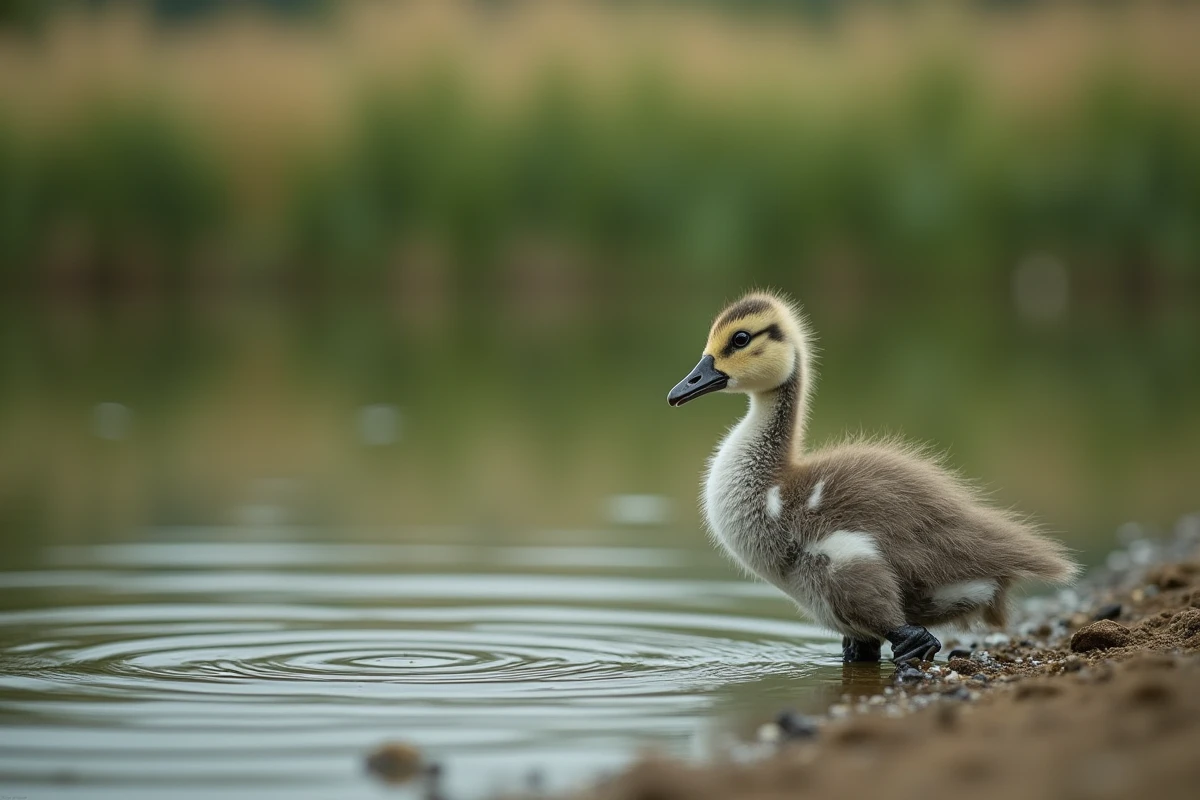
Bathing water is not a luxury for developing goslings. The bath stimulates the natural waterproofing of the plumage, a process linked to the uropygial gland that only functions fully with regular contact with water. A simple masonry tub filled a few centimeters is sufficient at the start, provided it is emptied and cleaned daily.
Without access to a bath, young geese develop dull plumage that does not protect properly against moisture and cold. This is easily noticeable: a goose that remains wet after a light rain does not have properly waterproofed plumage.
From Juvenile Goose to Adult Goose: Feeding, Space, and Behavior
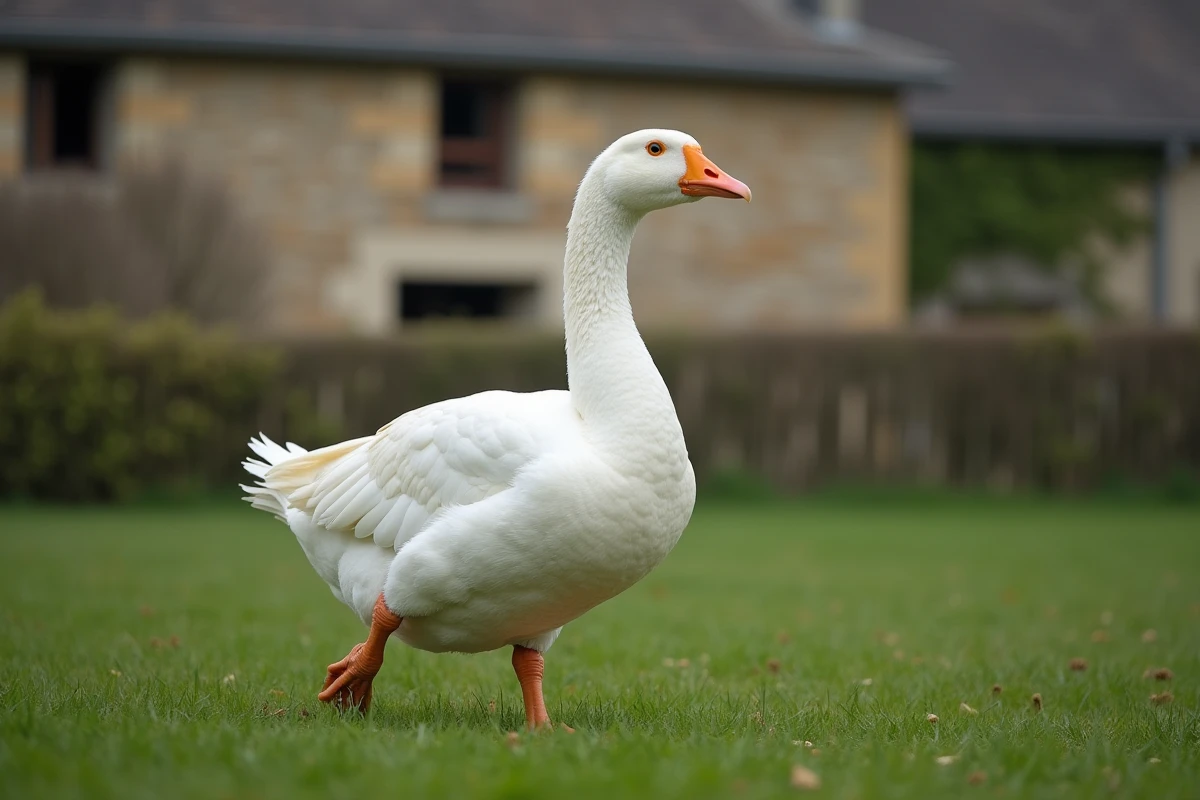
After two months, the goslings already resemble miniature geese. The plumage is nearly complete, the silhouette elongates, and group behavior becomes structured. A clear hierarchy emerges, with ganders starting to position themselves.
The ration evolves towards a grass-based diet supplemented with grains. In urban settings, the lack of grazing is compensated with mowed grass, leafy vegetables, and a maintenance pellet supplement. An excess of corn or wheat alone leads to fat but deficient geese.
Space Management in Restricted Enclosures
Ground density is the main limiting factor in micro-farming. Geese confined without environmental enrichment (straw piles, shaded areas, multiple water points) develop aggressive behaviors and feather pecking. A few concrete adjustments can reduce the pressure:
- Visually divide the enclosure with straw bales or pallets to create retreat areas, breaking up pursuits between dominant and subordinate individuals.
- Alternate access between two plots, even small ones, to allow the ground to regenerate and limit parasitic load.
- Install an elevated water point separate from the feeding point: this forces the geese to move and reduces conflicts around the feeder.
Sexual maturity generally arrives during the second year. Geese do not lay eggs before reaching this age, making it a breeding practice requiring patience compared to chickens. A well-established breeding pair can produce a reliable seasonal clutch for many years, as geese live long and remain fertile well beyond what is observed in other domestic poultry.
Raising geese in constrained spaces requires more careful daily observation than in open fields. Each growth phase, from hatching to the first egg, imposes adjustments in space, ration, and layout that cannot be standardized. The best indicator remains the behavior of the group: calm geese, with clean plumage, who bathe regularly and approach the breeder spontaneously, signal an environment suitable for their development.