
The 3131, Orange’s voice service that allows you to know the number of the last caller on a landline, is based on a simple principle: a voice server reads the details of the last incoming call. This function has existed since the 1990s and remains active, but it only covers one operator and one type of line. On mobile, on a box from another provider, or in a professional context, the 3131 simply does not respond.
Retrieving a missed call today involves very different mechanisms depending on the device, operating system, and usage (personal or professional). Here are the concrete alternatives, categorized by technical logic.
Fixed operator codes: recalling the last caller outside of Orange
Each fixed telephony operator can offer its own recall code. On Freebox Révolution and Freebox Pop, the code #69# serves the same function as the 3131: it identifies the last incoming number and offers a direct callback.
Other recent boxes integrate a dedicated button or a menu accessible from the box’s screen itself. The principle remains the same: the network temporarily retains the number of the last incoming call, and a code or shortcut allows you to retrieve it without going through a complete call log.
To find out precisely what replaces the 3131 on Le Petit Webmaster, the distinction by operator is detailed with the specific codes for each box on the French market.
The limitation of these codes remains the same as that of the 3131: they only retain the very last call, not a history. If two missed calls occur in succession, only the second will be accessible.

Native call log on Android and iPhone: operation and limits
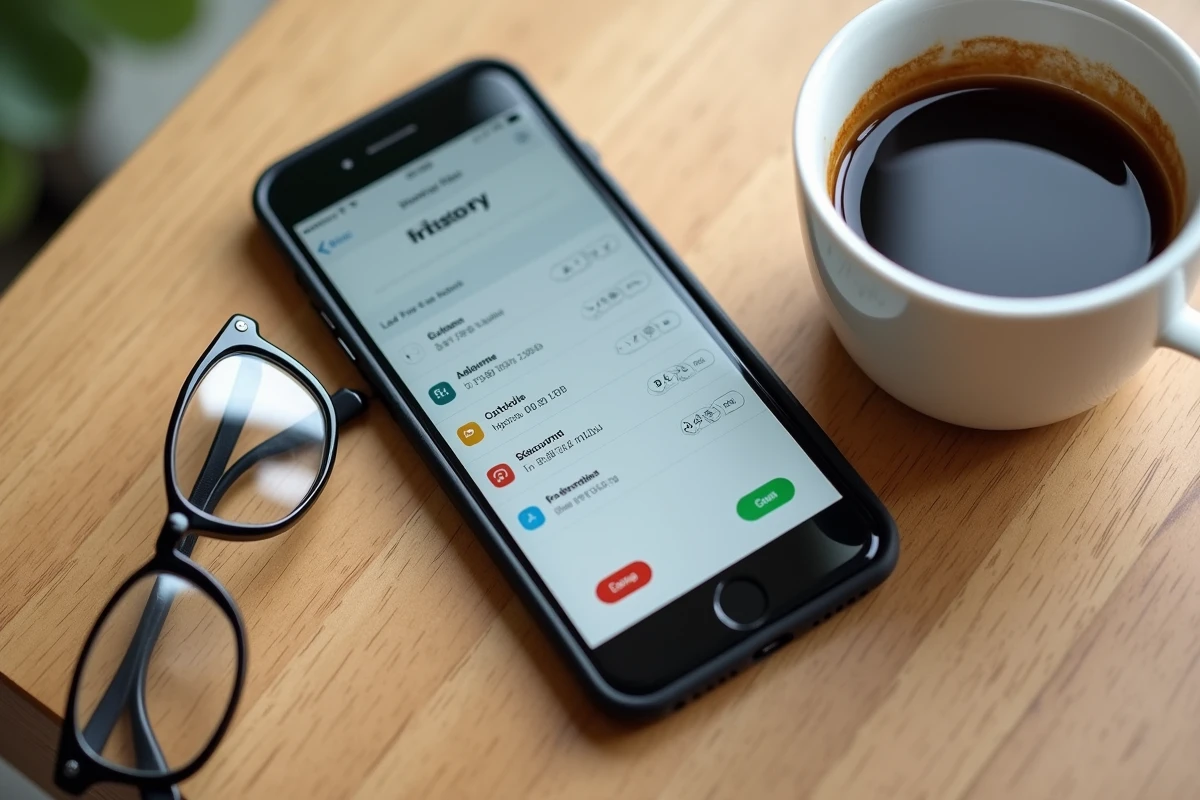
On a smartphone, the call log integrated into the system effectively replaces the 3131 for the majority of users. The “Recents” tab of the Phone app displays incoming, outgoing, and missed calls with timestamps, duration, and number.
Google Phone App on Android
The Google Phone app, pre-installed on many Android devices (Samsung, Xiaomi, Oppo), goes beyond a simple log. It includes a search by contact, number, or business name, allowing you to find an old call without manually scrolling through the list.
Call filtering also identifies suspicious numbers and flags them as spam even before the phone rings. Reverse number lookup works directly from the history: tapping on an unknown number initiates identification via the Google database.
History on iPhone
On iOS, the Phone app displays the “Recents” tab with a quick filter to show only missed calls. Deleting a call from the list is possible by swiping, but the native iOS history does not offer integrated reverse lookup. Identifying an unknown number requires a third-party app or a search engine query.
One point to keep in mind: native call logs on Android are not designed for long-term archiving. Depending on the manufacturers and system versions, the history may be limited to the most recent calls and automatically delete older entries.
Missed call notifications: the role of the system and applications
Even before opening a log, the first reflex to find a missed call is through the notifications of the operating system. Android and iOS display a persistent notification for each missed call, with the number or contact name.
However, these notifications can disappear if they are accidentally swiped away, if “Do Not Disturb” mode was active, or if the device was off at the time of the call. In this case, only the call log retains the trace.
Some third-party applications add an extra layer:
- Filtering apps (integrated into the Google Phone app or available separately) flag spam calls and group missed calls by category, preventing you from calling back a telemarketer.
- Parental control apps like Bark or KidsGuard Pro allow an administrator to remotely view the call history of a supervised device, with timestamps and duration.
- Visual voicemail, offered by most French mobile operators, displays the list of messages left with number identification, without needing to dial a voice code.
Cloud telephony and multi-device synchronization for professional use
In a telecommuting or professional context, the need goes far beyond simply identifying the last caller. Cloud telephony solutions like Ringover or Zoom Phone offer a synchronized call history across all devices: computer, smartphone, office IP phone.
The main advantage is centralization. A missed call on the office landline also appears on the mobile app and the web client, with direct access to the recording of the conversation or the associated voicemail. Advanced filters allow sorting by user, service, date, or custom tag.
This type of solution is aimed at organizations that manage a regular volume of calls and need traceability. For an individual, the native call log of the smartphone covers almost all needs.
Choosing the right method based on the device and usage
The choice between these alternatives depends on two parameters: the type of line (landline or mobile) and the level of detail sought.
- On a non-Orange landline, checking if the operator offers a code equivalent to the 3131 (like #69# on Freebox) remains the most direct method.
- On smartphone, the “Recents” tab of the native Phone app suffices in the vast majority of cases, complemented by missed call notifications.
- For professional use with multiple lines, a cloud telephony solution offers a complete, synchronized history accessible from any device.
The 3131 addressed a specific need in a world where the Orange landline dominated. Digital call logs render this voice service largely obsolete, except for Orange subscribers who remain on a classic landline without a connected box. On any other device, the information is already available, often even before one seeks it.