Preparing a delicious dish often relies on the precision of measurements. A pinch of this, a cup of that—every ingredient counts. Juggling between grams, ounces, cups, and milliliters can quickly become a headache for amateur cooks.
Imagine following an American recipe with cups while your scale only measures in grams. Or converting tablespoons to milliliters to avoid over-salting a dish. Mastering these measurement conversions allows you to maintain proportions and avoid mistakes that could ruin your culinary efforts. It also opens the door to a multitude of recipes from around the world.
The Basics of Measurement Conversions in Cooking
Understanding measurement conversions in cooking requires familiarization with several units. The metric and imperial systems differ, sometimes making recipes difficult to follow. Cooking measurement units include grams for solids, milliliters for liquids, as well as tablespoons and cups for various ingredients.
Common Equivalents
To facilitate conversions, here are some common equivalents:
- 1 teaspoon = 5 ml (liquid) or about 5 g (light solid)
- 1 tablespoon = 15 ml (liquid) or about 15 g (sugar)
- 1 cup = 240 ml (liquid) or equivalent in grams depending on the ingredient
Specific Conversions
For specific ingredients, conversions vary. For example, 1 cup of flour equals 130 g, while 1 cup of sugar weighs 245 g. Critical conversion: 60 centiliters to grams depends on the density of the ingredient being converted.
Conversion Table
| Ingredient | 1 cup (g) |
|---|---|
| Flour | 130 g |
| Sugar | 245 g |
| Butter | 240 g |
| Cocoa | 120 g |
These basic concepts allow for easy conversion between different measurements, ensuring the consistency of culinary results. For complete mastery, use appropriate conversion tools and consider the specifics of each ingredient.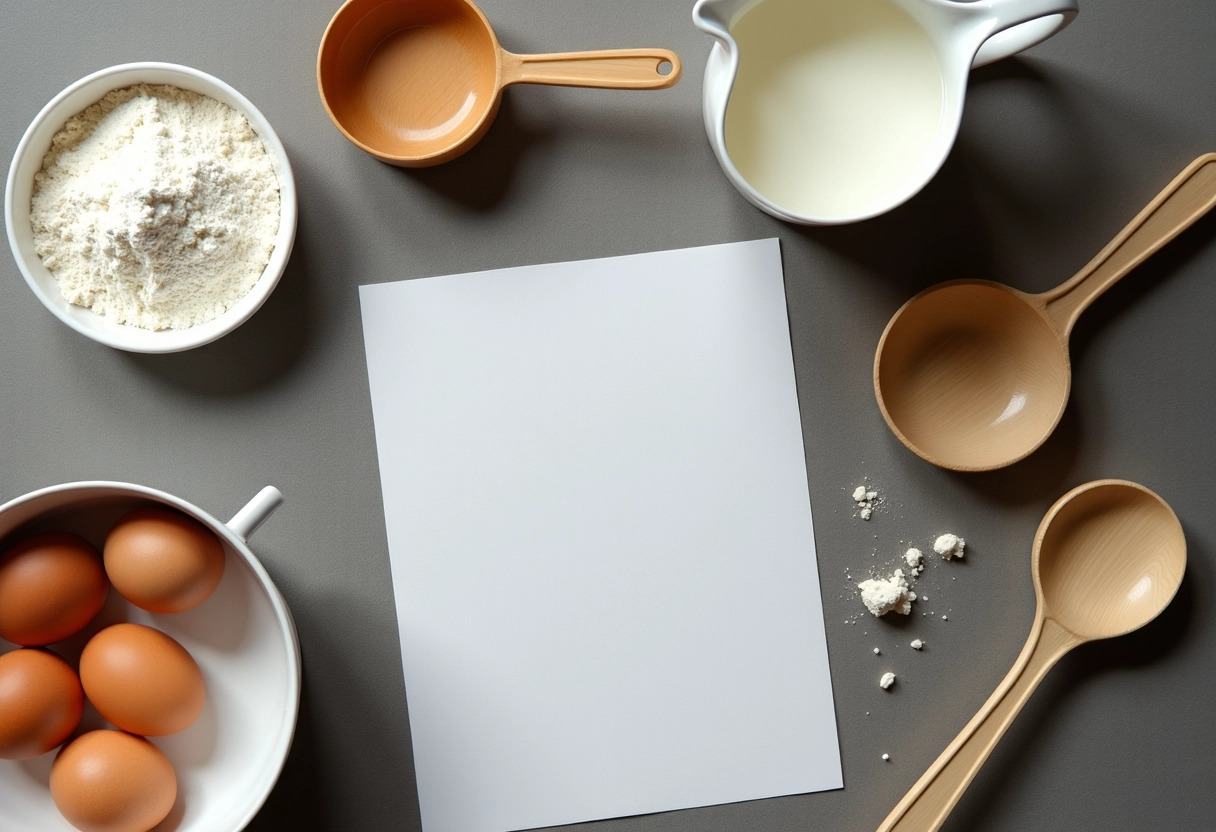
Tools and Tips for Accurate Conversions
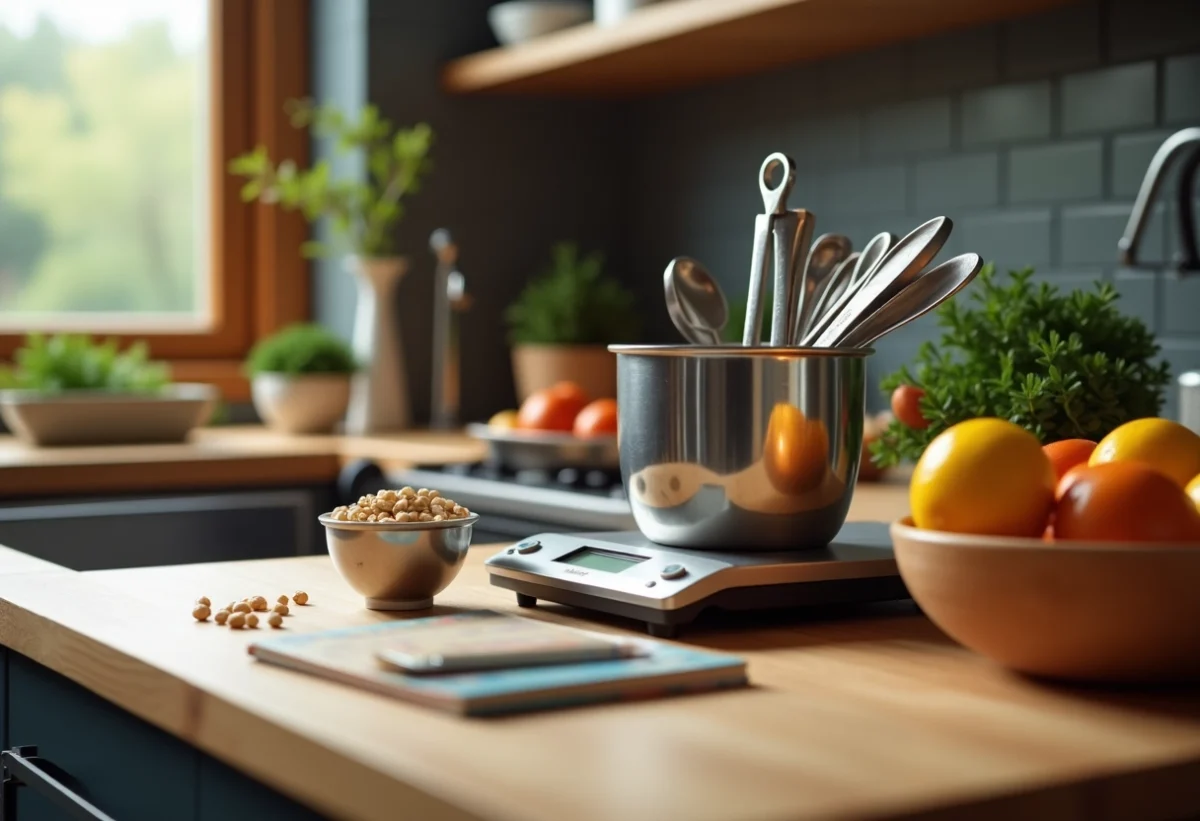
For precise conversions in cooking, use appropriate tools. A kitchen scale remains the most reliable instrument for measuring solid and liquid ingredients. It allows for converting volume units to mass units with great accuracy.
Online Converters
Online converters offer a practical and quick solution for converting recipe measurements. Several specialized sites allow you to transform volumes into masses specific to each ingredient. For example, a volume/mass converter by ingredient may indicate that 1 cup of flour equals 130 g, while a cup of sugar corresponds to 245 g.
Using Measuring Utensils
Some measuring utensils are also essential:
- Teaspoon: 5 ml (liquid) or 5 g (light solid)
- Tablespoon: 15 ml (liquid) or 15 g (sugar)
- Coffee cup: 100 ml of liquid or 100 g of milk
- Medium bowl: 250 ml of liquid or 250 g of water
Oven Temperature
Converting cooking temperatures is often necessary, especially between Celsius and Fahrenheit scales. Some common equivalents include:
- 180° Celsius = 350° Fahrenheit
- 210° Celsius = 410° Fahrenheit
Use a converter for oven temperature to ensure cooking accuracy. A difference of a few degrees can alter the final result of a recipe.
Conversion Programs
Mobile apps and cooking software assist you in these conversions. They provide quick access to databases of equivalents and allow you to adjust quantities according to the specific needs of recipes. For even more precise conversions, opt for tools provided by recognized institutions such as the Food and Agriculture Organization of the United Nations.
These tools and tips ensure the consistency of culinary results, providing accurate measurements and error-free preparation.