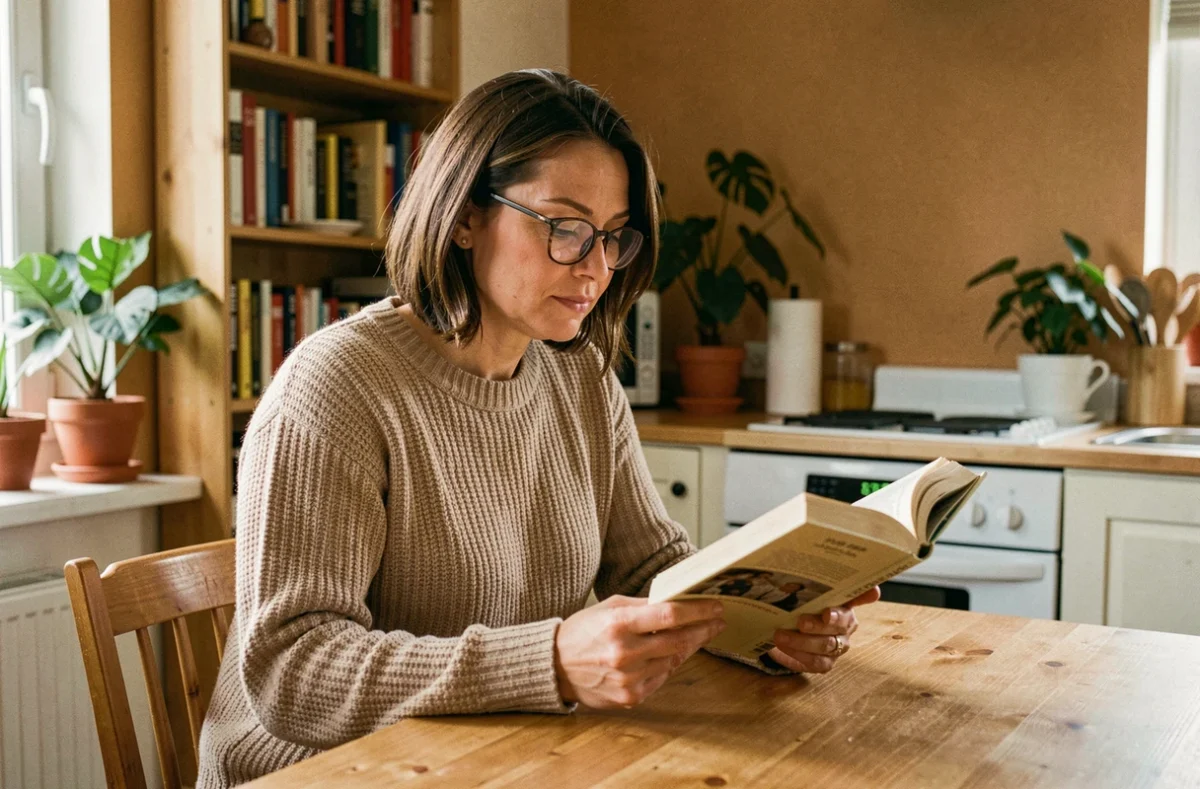
A woman signing a lease without being married, moving into a studio for her studies or work: this situation is commonplace in everyday life. It is much less so when viewed through the lens of religious traditions. Living alone as a woman raises very concrete questions in Islam, Christianity, or Judaism, and the answers vary according to schools of thought, eras, and contexts.
Family Guardianship and Residential Autonomy in Islam
The starting point of the Islamic debate is not a verse that explicitly forbids a woman from living alone. No unanimous textual prohibition targets the residential solitude of an adult Muslim woman. The discussion focuses rather on the concept of wilaya, this authority or family guardianship that, according to some jurists, extends to the choice of residence before marriage.
Opinions differ according to the legal school followed. Some scholars believe that an adult and reasonable woman can freely choose her place of residence if her safety is not threatened. Others consider that the wilaya of the father or guardian also covers this decision, at least as long as the woman is not married.
To better understand the religious conditions for a single woman within the Islamic framework, it is necessary to distinguish what pertains to religious texts from what pertains to local customs. In many Muslim societies, social norms weigh as heavily as legal opinions.
Practical Conditions That Modify Islamic Religious Opinion
Contemporary opinions favoring living alone set precise conditions. These are not vague recommendations: each condition responds to an identified legal principle.

- Housing and Neighborhood Safety: The location must allow the woman to avoid exposure to physical danger. A secure building in a quiet neighborhood meets this criterion.
- Absence of Khalwa: The situation of being alone with a non-mahram man (a man who is neither a husband, father, brother, nor uncle) must be avoided. Specifically, this concerns mixed housing or private visits.
- Maintaining Religious Obligations: Prayer, fasting during Ramadan, and prescribed dress behavior must be able to be respected without housing-related obstacles.
- Recognized Necessity: Studies or work in another city constitute a circumstance that may take precedence over the preference to stay with one’s parents, provided that safety is ensured.
This last point is particularly debated. A student moving to pursue her university studies has a reason that most contemporary jurists recognize as legitimate.
Religious Life and Women’s Celibacy in Christianity
Christianity approaches the question from a very different angle. The Catholic tradition has known for centuries the consecrated life, where women choose to live alone or in community without being married. Nuns, consecrated virgins, and hermits live outside the marital framework by vocation.
This choice is not imposed: it is valued as a spiritual commitment. Saint Paul, in his first letter to the Corinthians, presents celibacy as a state that allows one to fully dedicate oneself to God. The single woman living alone in the Christian tradition does not violate any doctrinal rule.
In Protestantism, the question arises less in terms of formal rules. The emphasis is placed on individual freedom of conscience. A Protestant woman living alone does not face any particular ecclesiastical prescription.
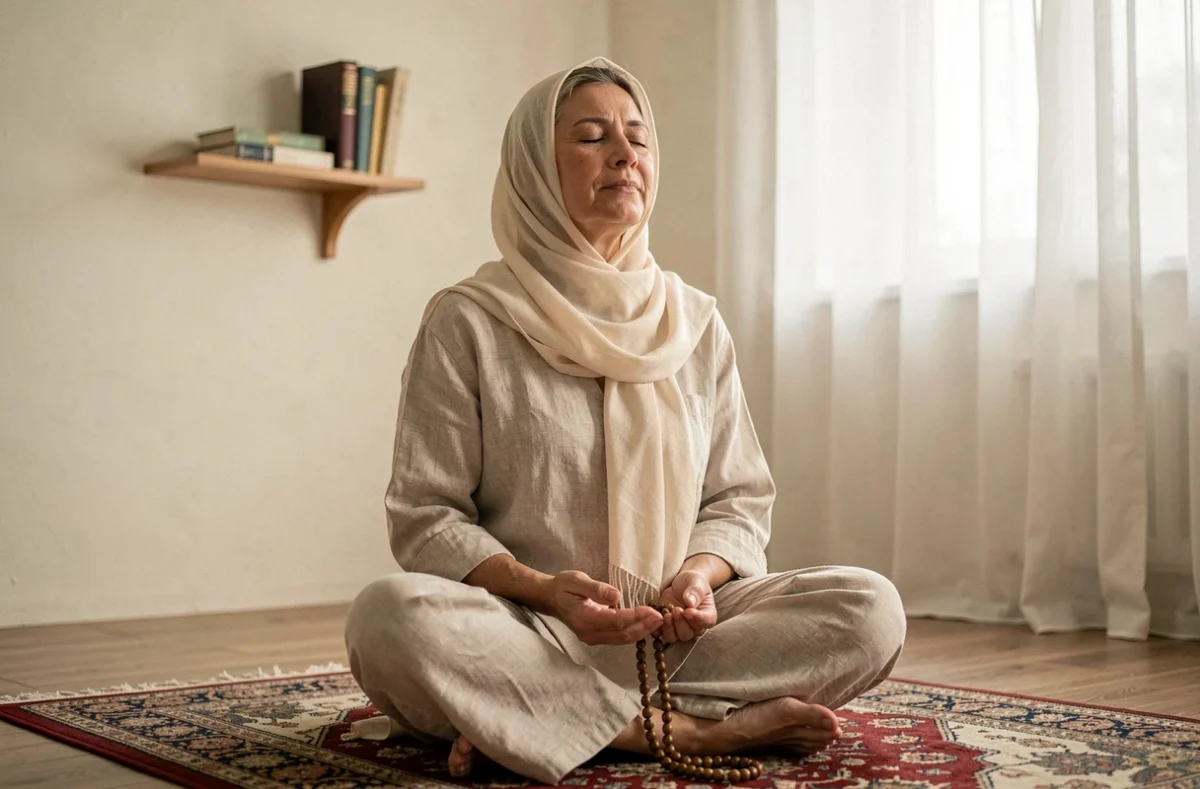
The difference with Islam is structural: Christianity does not provide for a system of male guardianship comparable to wilaya. Family consent to the lifestyle does not have an equivalent canonical status.
The Particular Case of Orthodoxy
In Orthodox traditions (Greek, Russian, Coptic), women’s monastic life remains very structured. Living alone outside a monastery is not prohibited, but the parish community sometimes exerts social pressure comparable to that observed in some Muslim societies. The religious norm and cultural norm merge.
Single Woman in Judaism: Between Halakha and Modern Reality
Halakha, Jewish religious law, does not contain an explicit prohibition for a woman to live alone. The question of modesty (tsniout) applies to behavior, not to residential status. A single woman who respects the rules of modesty in dress and behavior does not violate any commandment by living in her own housing.
In Orthodox Judaism, the pressure is rather directed towards marriage. The commandment “be fruitful and multiply” (Genesis 1:28) creates a strong social expectation around married life. Living alone for a long time is perceived less as a transgression than as a temporary situation to resolve.
Liberal or Reform Judaism imposes no restrictions on solo living. A woman has complete autonomy in choosing her residence and lifestyle.
What Distinguishes Religious Rule from Social Pressure
Why do so many women feel guilt at the thought of living alone, even though their religion does not formally prohibit it? Because the cultural norm often presents itself under a religious guise.
In the three major monotheistic traditions, the religious text is more nuanced than the prevailing community discourse. Islam conditions, Christianity does not prohibit, Judaism remains silent on the subject. Categorical prohibitions generally come from local custom, not from the theological corpus.
Differentiating between the two requires an effort of reading and sometimes the help of a qualified scholar or religious figure. Consulting a trusted religious authority directly remains the most reliable approach for any woman wishing to reconcile her faith with her residential autonomy. The answer will always depend on the school followed, personal context, and country of residence.