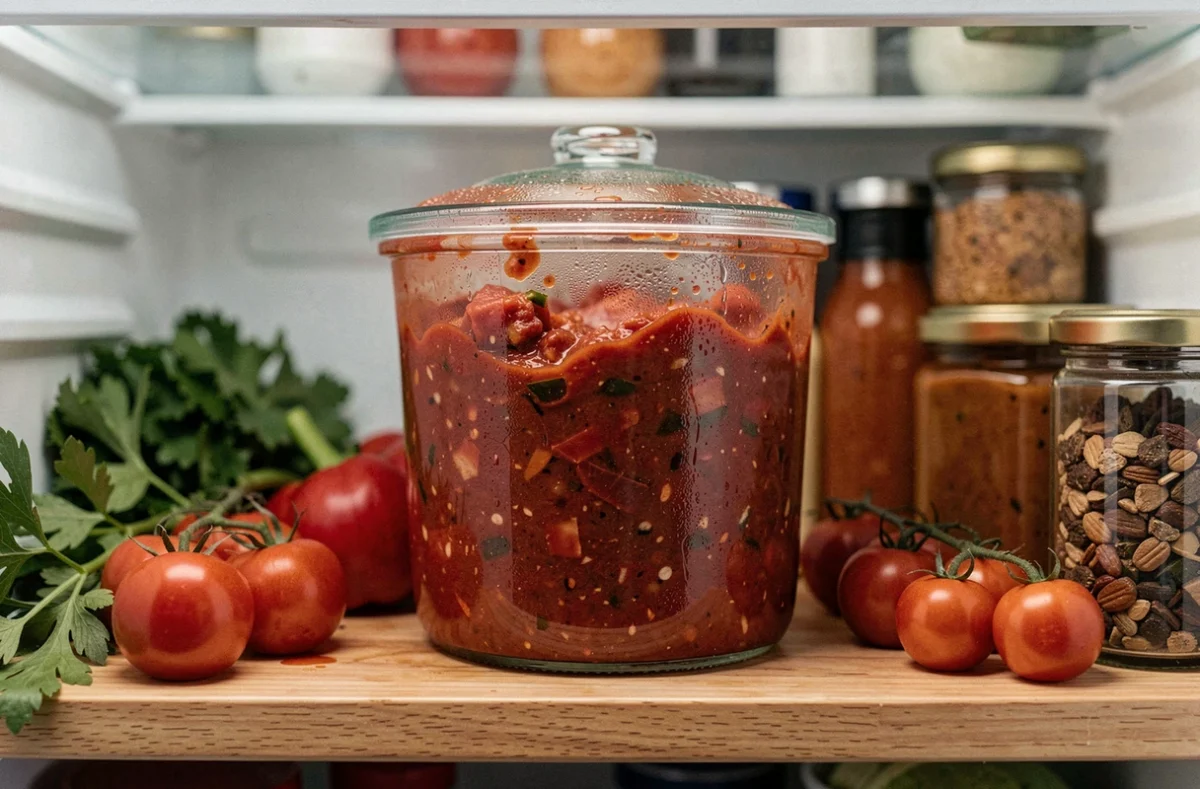
A homemade bolognese sauce prepared in large quantities raises a simple yet often overlooked question: how long can it actually be kept in the refrigerator without risk? The standard answer is around 3 to 4 days in the refrigerator, but this duration is based on specific conditions that most recipes do not detail.
Refrigerator Temperature and Bolognese Sauce: The Underestimated Factor
The shelf life of homemade bolognese sauce does not solely depend on the number of days that have passed. It primarily depends on the actual temperature of your refrigerator.
For a sauce containing meat, the recommended threshold by food safety organizations is around 4 °C or lower. Beyond this, bacterial growth accelerates, and the commonly cited durations no longer apply. A refrigerator set at 7 or 8 °C, which is common in households, significantly reduces the safety window.
Few cooks regularly check the internal temperature of their appliance. A refrigerator thermometer costs just a few euros and can eliminate this doubt. By consulting the details on storing homemade bolognese in the refrigerator, you will find the same guideline of 3 to 4 days, but always contingent on a properly set appliance.
Cooling Bolognese Before Refrigeration: A Critical Point

Placing a large pot of still hot sauce directly in the refrigerator poses two problems. The first: the central mass takes a long time to cool down, creating a zone where bacteria multiply actively. The second: the heat released raises the overall temperature of the refrigerator, affecting other stored foods.
The recommended method is to divide the sauce into shallow containers immediately after cooking. Low-height containers expose a larger surface area to the cold and speed up cooling. The sauce should not remain at room temperature for more than two hours before being refrigerated.
Common Mistakes When Cooling
- Leaving the whole pot to cool on the countertop for several hours, with the lid closed, before transferring it to the refrigerator: the central temperature remains too high for far too long.
- Using a deep and narrow container (like a tall mixing bowl) that traps heat in the center of the sauce.
- Placing the sauce in the refrigerator in a container without an airtight lid, which promotes cross-contamination with other foods and accelerates oxidation.
These often overlooked actions directly affect the actual shelf life of your bolognese sauce.
Expired Bolognese Sauce: Why Smell Alone Is Not Enough
A common reflex is to smell the sauce before reheating it. If it doesn’t smell suspicious, it’s considered good. This reflex is misleading.
A bolognese sauce can harbor pathogenic bacteria without any visible change in its smell, color, or texture. Organoleptic signs (marked acidity, surface mold, sour smell) often appear late, sometimes after the sauce is already unfit for consumption.
For individuals with weakened immune systems (pregnant women, young children, elderly people), the risk is amplified. Strictly adhering to the 3 to 4-day limit, without relying solely on appearance, is the only reliable precaution.
Reheating and Food Safety
Reheating a bolognese sauce does not “reset the clock.” If the sauce has been stored too long or under poor conditions, bringing it to a boil eliminates some bacteria, but not the toxins already produced by those bacteria. Reheating does not compensate for improper storage.
When reheating a portion, bring it to a uniform and thorough temperature, stirring to avoid warm spots in the center of the dish.
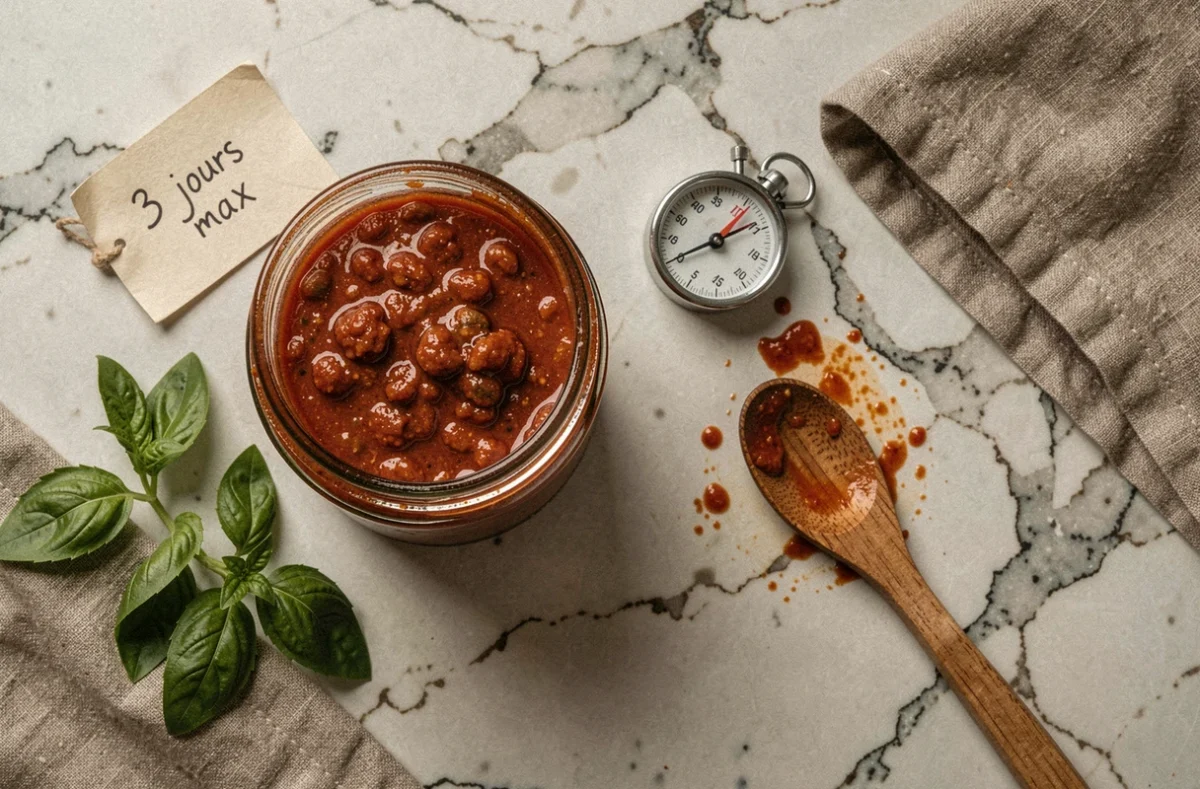
Containers for Storing Meat Tomato Sauce: Glass, Plastic, Stainless Steel
The type of container influences preservation, and not just for practical reasons.
- Glass containers with clip or screw lids provide a reliable airtight seal and do not react with the acidity of the tomato. They are easy to clean and do not retain odors.
- Food-grade plastic containers work, but tomato sauces tend to stain, and on worn or scratched plastics, micro-cracks can harbor difficult-to-remove residues.
- Stainless steel containers with airtight lids cool the sauce quickly due to their thermal conductivity. They are a good choice for the cooling phase before transferring to the refrigerator.
Regardless of the material, the determining factor remains the airtightness of the lid. A poorly closed container exposes the sauce to the air in the refrigerator, accelerates oxidation, and promotes odor transfer.
Beyond the Refrigerator: Freezing Bolognese Sauce
When you know from the preparation that you will not consume all the sauce in the following days, freezing remains the safest solution. Portioning it into suitable containers or flat freezer bags, bolognese sauce can be stored for several months in the freezer without major alteration of taste.
Thawing should ideally be done in the refrigerator the day before, not at room temperature. Once thawed, the sauce should be consumed within 24 hours and should never be refrozen.
The shelf life of homemade bolognese sauce ultimately depends on a combination of factors: appliance temperature, cooling speed, and container airtightness. Three to four days remains a reliable guideline, provided that each step has been followed. When in doubt, it is better to freeze right from the start than to risk food poisoning from a sauce that “looked normal.”