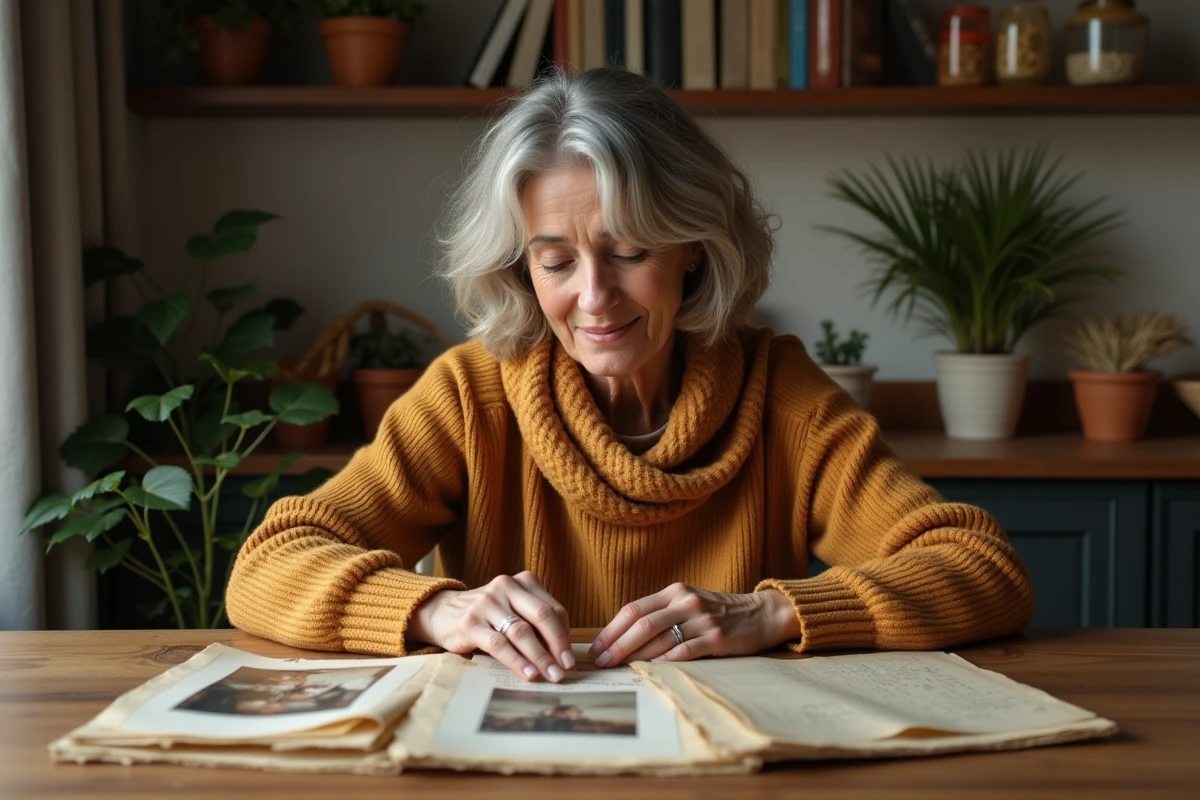
The absence of DNA data does not limit access to family memory. Civil status records, often overlooked, contain precise information about several generations. Spelling errors in names or contradictory dates regularly complicate researchers’ tasks.
Some municipal or departmental archives have digitized resources accessible remotely, but their organization varies greatly from one region to another. Collaborative online family trees sometimes reveal unexpected connections, but require careful source verification.
Why tracing one’s origins without DNA testing is increasingly appealing
Rediscovering one’s roots without resorting to DNA is experiencing a notable resurgence today. Many see it as a way to preserve their genetic privacy, defend family transmission, and write their own history. Stories passed down orally, old papers, hand-drawn family trees: all these tools remain solid reference points in France for tracing back through time.
The DNA test, with its instant results, attracts due to its ease. However, traditional genealogy, which relies on the memory of elders and the examination of civil status records, offers a less rapid but denser adventure. This choice sometimes arises from necessity, but more often, it is a desire to remain in control of one’s own story. Many families prefer this path, keen to shape their collective memory away from global algorithms.
Engaging in genealogy means reconnecting with investigation, verification, and cross-referencing. Each found record—birth, marriage, death—fits into a puzzle where the human element prevails. To learn more about Conseils Parentaux, explore resources that allow tracing one’s origins without resorting to genetic testing. Personal research then becomes a quest for meaning, where each name pulled from oblivion resonates in a shared collective memory.
Which sources and tools to prioritize for tracing family history
To successfully conduct genealogical research, one must rely on a variety of resources, the reliability of which is the strength of any serious endeavor. Departmental archives are the cornerstone of this quest: they preserve irreplaceable documents, from civil status records to parish registers from before the Revolution. Each record, sometimes annotated in the margins, sheds light on a detail of family life.
Here are the main avenues to explore to trace the footsteps of one’s ancestors:
- Digitized civil status data, often made available online on departmental council portals, allow remote access to documents that may be centuries old, whether for Paris, Normandy, or even Canada.
- Online archives facilitate the retrieval of a birth, marriage, or death certificate, even far from the place of origin.
- Censuses, electoral lists, and tables of inheritances or donations provide additional clues about family paths.
The period of World War I generated a wealth of useful documents: military records, service books, correspondence, all available in archive centers. When the family settled in Paris, municipal archives help complete data gathered elsewhere. For those whose ancestors crossed the Atlantic to Canada, civil status records and immigration files often prove crucial.
When research proves challenging, archive inventories, specialized databases, or alphabetical indexes can save valuable time in identifying a forgotten branch. Each document must be studied carefully, each piece of information cross-referenced, to ensure the robustness of any genealogical advancement.
Concrete tips for overcoming obstacles and enriching one’s genealogy
Advancing in genealogy is not a smooth journey. One must adopt a rigorous method and never get discouraged by a missing record or an incomplete lineage. Parish registers, often neglected after the Revolution, nonetheless offer the possibility of tracing much further back. Systematically cross-referencing civil status records with censuses or inheritance tables allows for the discovery of brothers, sisters, or unexpected connections.
It may be wise to request access to departmental archives to consult non-digitized documents. Certain series of files, such as military records or notarial minutes, contain unsuspected information. The words of family witnesses are invaluable: they complement official archives, illuminate gray areas, and convey stories and lineages that papers alone do not tell. Exchanges with other enthusiasts, whether online or during meetings in historically rich regions like Drôme-Ardèche or Tournon, can sometimes open unexpected avenues.
Analytical tools can also provide a boost: diagrams, charts, and research notebooks help clarify the mass of information. A recurring first name, a profession that is passed down, a lasting address: every detail matters. Do not hesitate to seek the keen eye of a genetic investigator genealogist like Loïc Duchamp, or to benefit from the external perspective of a veterinarian such as Jean-Charles Vanier, who can sometimes open new paths. As for the archives of the National Center or those of notarial studies, consulted on Grande rue, they can suddenly reveal family branches thought to be lost forever.